Our know-how
The art of removing the alcohol, without losing anything along the way
An alcohol-free wine worthy of a great cru can't be improvised. Here, step by step, is the know-how that takes our cuvées from vine to bottle, and why this process changes everything on the palate.
Step 1
We vinify like a great wine
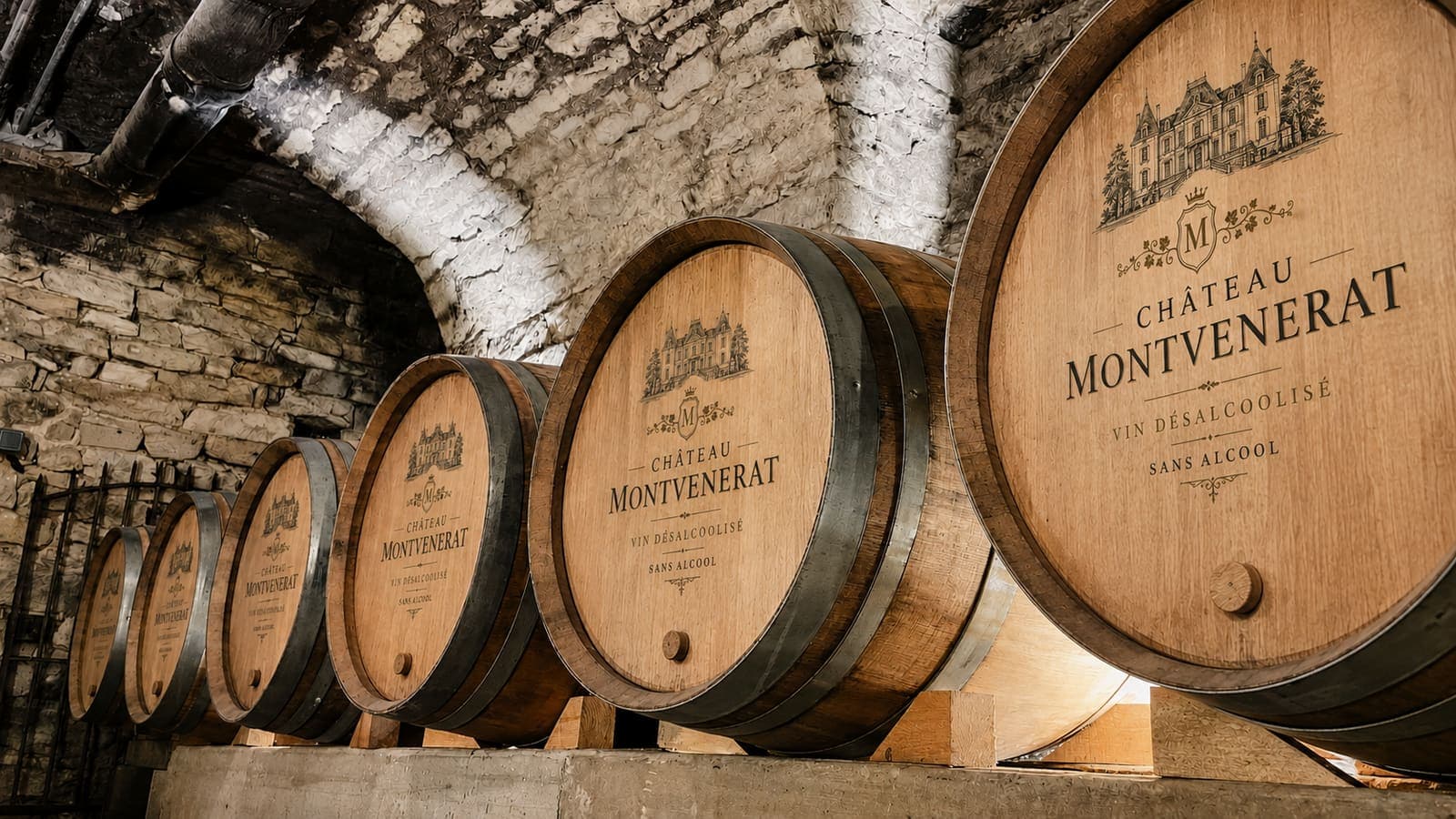
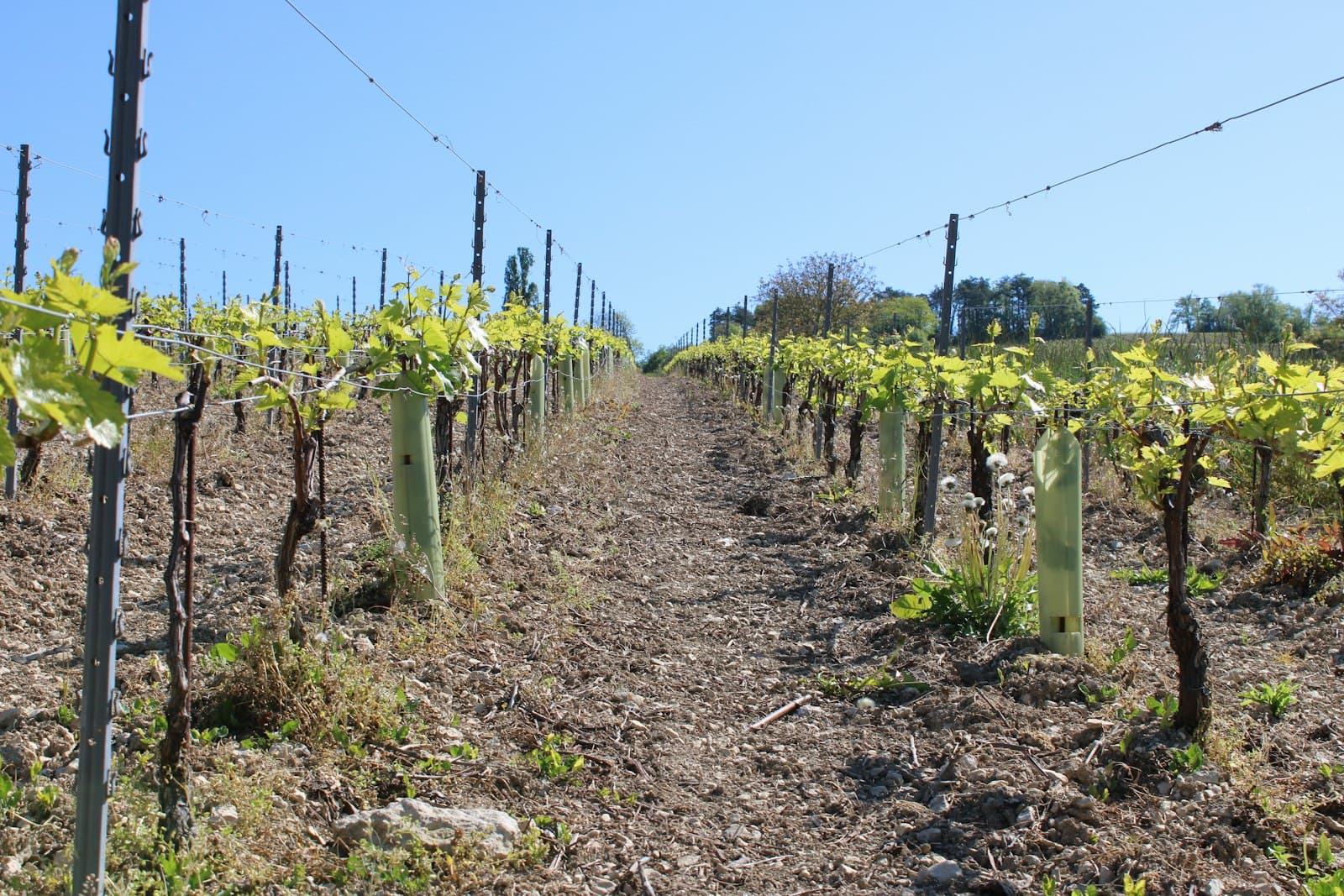
You can only remove the alcohol from something that was first a real wine. Every Mont-Vénérat cuvée is therefore born like any great Provence wine: hand harvesting, careful pressing, complete alcoholic fermentation, aging. Nothing is simplified at this stage, because whatever the wine doesn't receive here, no process can give back to it later.
Step 2
We extract the alcohol by cold vacuum distillation
The alcohol is then removed by vacuum distillation, below 30°C. By lowering the pressure, water and alcohol evaporate at low temperature, where conventional processes require heat that destroys the finest aromas. It's a slow and costly method, but it's the only one that leaves the wine its color, its nose and its structure.
Step 3
For the rosé and the white, a light carbonation
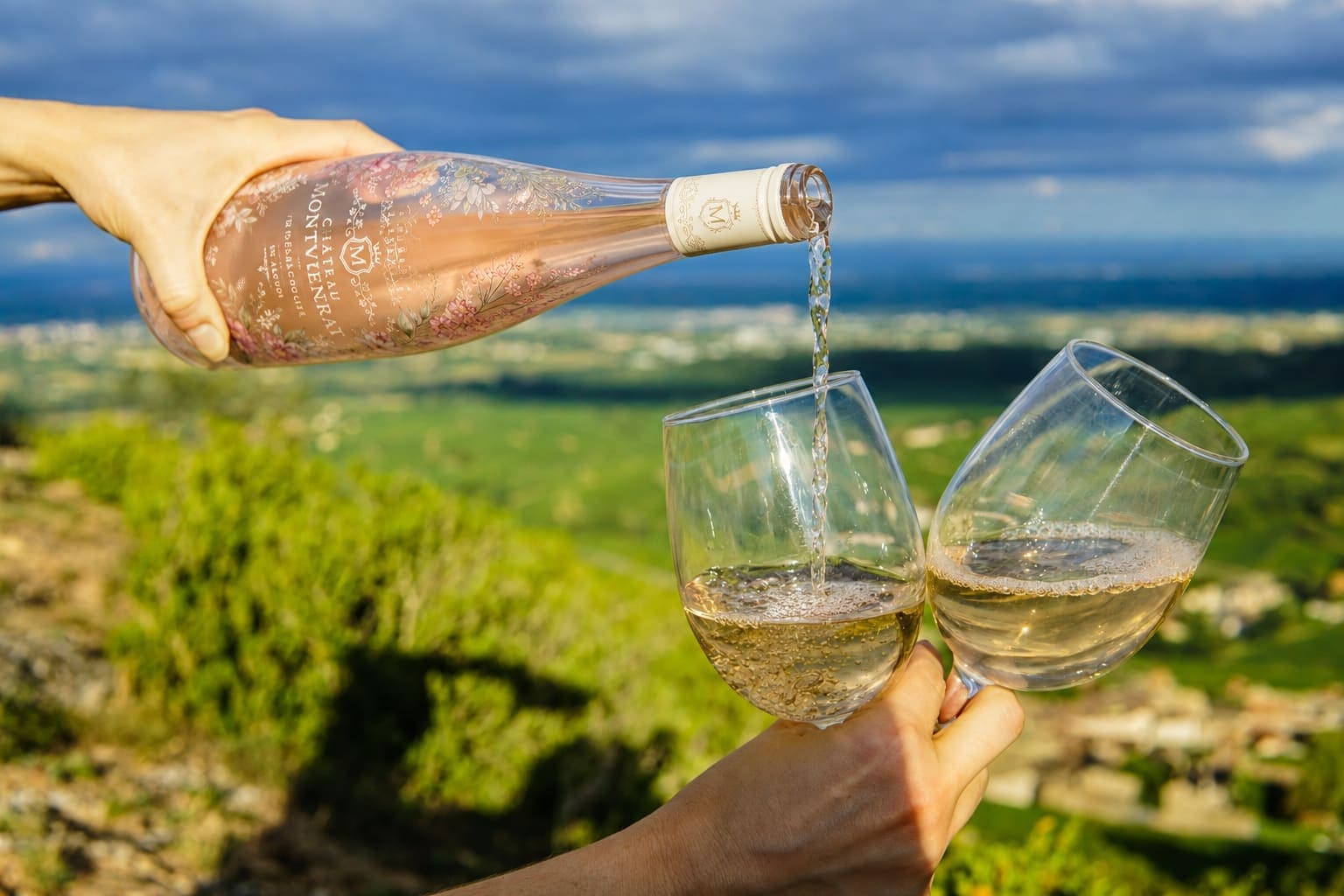
Removing the alcohol also removes body: it's what carries the aromas on the palate and gives the wine its structure. For our rosé and our white, we restore that structure with a light carbonation using food-grade CO2, added with the same precision as a champagne dosage. Our Pinot Noir, meanwhile, fully expresses itself without this step: it stays a still wine, with no bubbles.
Three steps, one wine
To taste it is to understand it
Legal name: rosé and white are sparkling dealcoholized wines, our red is a dealcoholized wine (EU regulation 2021/2117, ABV ≤ 0.5% vol.).